Functional Kitchen Design: Layouts That Fit the Way You Live
Most people start a kitchen remodel by picking cabinet colors and countertops. Those decisions matter, but they won’t fix a layout that doesn’t work for how you use the space.
Functional kitchen design starts with your layout. It determines how you move through the kitchen, where traffic patterns create bottlenecks, and whether multiple people can work comfortably at the same time. Getting the layout right makes everything else work better, whether you’re looking at simple kitchen design ideas for a straightforward refresh or planning a complete reconfiguration.
Common Kitchen Layouts
L-Shape Layouts
L-Shape layouts use two walls meeting at a corner, which leaves the rest of the space open and works well when the kitchen flows into another room. The corner can get awkward, so some people install lazy Susans, others just store serving platters there since they’re only needed occasionally. You can add an island without messing up traffic flow.
U-Shape Layouts
U-Shape layouts maximize storage and counter space with three walls of cabinets, which works well for people who cook frequently and have the square footage to support it. The distance between opposing walls matters more than you’d think. Under 4 feet feels squeezed, over 9 feet means too much walking back and forth. Somewhere around 6-7 feet usually feels right for comfortable movement.
Galley Layouts
Galley kitchens put two parallel counters with a walkway between them, which makes them efficient because everything’s within reach. The main problem is traffic. If your galley doubles as the path to the back door, you’re constantly moving aside for people walking through. Closed-end galleys work better since they keep the workspace contained instead of turning it into a hallway. This layout gets dismissed as too small, but professional kitchens use it specifically because it minimizes wasted movement.
Open-Concept Kitchen Design
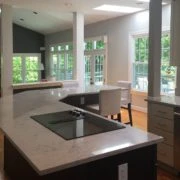
Open-concept kitchens remove walls so the kitchen flows into living and dining spaces, which makes houses feel bigger and lets you cook while staying part of whatever’s happening elsewhere. The tradeoff is that dirty dishes become visible from the couch, and cooking smells travel farther. The range hood becomes more important when there’s no door to close. Some people use a ceiling beam or a flooring change to mark where the kitchen zone ends without actually building walls.
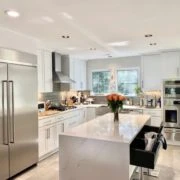
Kitchen Layout Ideas with an Island
Islands often become the most-used part of the kitchen because they can serve multiple purposes simultaneously. How you prioritize these functions shapes the island’s dimensions, placement, and features in ways that ripple through the entire kitchen design.
Seating
An island designed for actual dining requires more space than most people anticipate. Each seated person needs 24 inches of width and 15 inches of knee clearance, plus another 12 inches behind for pulling stools in and out. That’s why seating four people comfortably pushes an island to at least 8 feet long and affects where it can be positioned relative to other work zones.
Two-tier islands are best when you want the seating, but you don’t want dinner guests staring at dirty prep bowls. The raised bar-height section screens the working surface from view, though it adds complexity to cabinet configuration underneath.
Storage
Deep drawers for cookware, pull-out bins for waste management, vertical dividers for sheet pans. These features require specific cabinet configurations that affect the island’s depth and the clearances needed around it. The four-sided access of an island allows for storage solutions that don’t work against perimeter walls, but that flexibility only matters if the island is positioned where you can actually access all four sides during regular use.
Prep Work
A large uninterrupted counter surface sounds simple, but it influences where other elements can go. Adding a secondary sink to an island makes sense when multiple people cook together regularly or when the main sink sits too far from primary prep areas, but it affects plumbing routing and may have structural implications. Counter-level outlets for stand mixers need positioning where cords won’t drape across the work surface or interfere with seating.
Orientation
Position an island so the cook faces into the room rather than toward a wall, and you’ve fundamentally changed how the kitchen connects to the rest of the house. This works well for supervising children in adjacent spaces or staying part of conversations while cooking, but that single decision affects where the range goes, how the work triangle functions, where traffic flows, and whether the island blocks sight lines between other rooms.
Simple Kitchen Design Ideas
Some households cook elaborate meals most nights, while others rely more on reheating and takeout. Both need functional kitchens, just different ones. Designing a custom kitchen means understanding these differences before making layout decisions.
If You Cook Frequently
You need counter space adjacent to the stove for hot pans, adequate prep areas, and storage that keeps frequently-used tools accessible. The work triangle between fridge, sink, and stove should minimize unnecessary steps during meal prep.
If Your Kitchen Doubles as Social Space
When guests naturally gravitate to the kitchen during gatherings, or your family tends to congregate there throughout the day, the space needs to accommodate multiple people without everyone getting in each other’s way. That might mean positioning the cook so they can see and interact with people in adjacent rooms rather than facing a wall, and creating spots where people can sit or stand without blocking the work triangle.
If You Have a Busy Household
Family kitchens often function as command centers where meal prep happens alongside homework, conversations, and constant requests for snacks. The challenge is allowing these activities to coexist without constant interruptions. Islands positioned with sight lines to adjacent rooms allow you to monitor what’s happening elsewhere while working, and storage accessible at different heights means kids can help themselves to basics without requiring assistance.
Getting It Right for Your Space
General principles only take you so far because every house presents different constraints. Maybe you have a structural beam that limits where plumbing can go, or your family’s cooking habits don’t quite fit the standard categories, or the room has an awkward shape that makes typical layouts difficult to implement.
Kitchen designers who’ve worked on dozens of local projects can look at your specific space and figure out what’s actually possible given your constraints. They know which solutions work in practice and which ones sound good but end up creating new problems down the line.
Century Bathrooms & Kitchens has spent over 20 years designing custom kitchens for Northern Virginia homes, working through the specific challenges that come with local architecture and family needs. Schedule an appointment with us, and we’ll talk you through what would work in your particular space.